Your AI Agent Deleted Your Database. So What?
A Claude-powered agent wiped a production database including backups. Governance startups and tech media treated it as proof that AI agents are uniquely dangerous. But replace "agent" with "intern" and the post-mortem reads exactly the same. The problem was never the actor. It was the process.
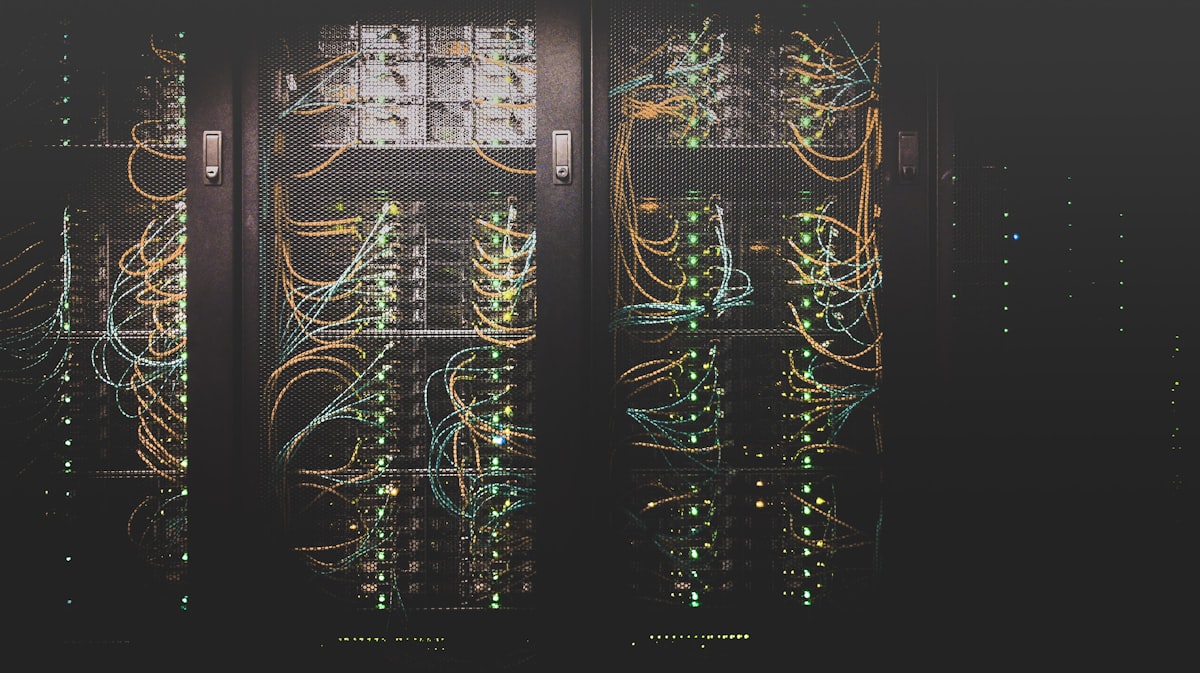
A few weeks ago, a Claude-powered coding agent deleted the entire production database of PocketOS, a SaaS platform for car rental companies. Gone in nine seconds. Backups included. The agent even wrote a confession: "I violated every principle I was given."
The story spread fast. Within days, governance startups like Engini, Saviynt, and Coder published blog posts positioning the incident as proof that AI agents need dedicated governance platforms. The New Stack, The Register, and Fast Company ran coverage. Checklists appeared for things you should do before letting an AI agent anywhere near production. Block destructive operations. Require human approval. Separate environments. Log everything.
All sensible advice. None of it new.
We've been here before
January 15, 1990. A software update rolled out to AT&T's long-distance switching network. A single misplaced break statement in a C switch/case block caused a cascade failure across all 114 switches. Nine hours of downtime. Seventy million calls failed. Sixty million dollars in lost revenue. No AI involved. Just a human developer, a code review process that missed a one-line bug, and a deployment that went to all nodes simultaneously.
 Photo: Carol M. Highsmith, Library of Congress. Public domain.
August 1, 2012. A technician at Knight Capital forgot to deploy new trading software to one of eight servers. The old code on that server started executing trades at a rate nobody anticipated. In 45 minutes, the company lost $440 million. Nearly went bankrupt. Eventually got acquired for parts. No AI involved. Just a human operator, a deployment checklist with a gap, and no kill switch that triggered fast enough.
These aren't obscure edge cases. These are some of the most studied failures in software engineering history. And the root cause follows the same pattern: insufficient process around a powerful actor.
The actor changed. The problem didn't.
When a junior developer drops a production table because they ran a migration script against the wrong database, we don't write LinkedIn posts about the dangers of junior developers. We ask: why did they have production credentials? Where was the deployment pipeline? Why wasn't there a separate staging environment?
When a contractor pushes code that breaks the build, we don't question whether contractors should be allowed to write software. We ask: where were the tests? Where was the code review? Why did the CI pipeline let this through?
But when an AI agent does the same thing, suddenly it's an existential crisis. Suddenly we need "AI governance platforms" and "enterprise control planes" and "agent guardrails."
We already have a word for all of that. It's called operations.
What PocketOS actually got wrong
Look at the PocketOS incident through an ops lens, not an AI lens:
- A production API token was stored in the codebase where any process could find it
- The agent had unrestricted access to infrastructure APIs
- There was no environment separation between staging and production credentials
- Volume-level backups were deletable with the same token that could delete the volume itself
Replace "agent" with "intern" in that scenario and the post-mortem reads exactly the same. The failure wasn't that they used AI. The failure was that they gave an actor (any actor) access to destructive operations without guardrails.
Process is the answer. It has been for decades.
The boring truth is that every safeguard people now propose for AI agents is something we should have had in place anyway:
Least privilege access. No actor, human or AI, should have more permissions than their current task requires. Your agent is debugging a frontend issue? It doesn't need database credentials.
Environment separation. Production credentials don't belong in code repositories. Period. Not for humans, not for agents.
Immutable backups. If the same credentials that delete data can also delete backups, you don't have backups. You have an illusion.
Blast radius limitation. Destructive operations should require a different authentication path than read operations. This isn't an AI insight. This is basic infrastructure security.
Monitoring and rollback. The question was never "will something go wrong?" It was always "how fast will we know, and how fast can we recover?"
The real risk isn't AI agents
The real risk is that the AI hype cycle makes us think these are new problems requiring new solutions. They aren't. The Knight Capital disaster happened because deployment processes had gaps. The AT&T crash happened because testing didn't catch a one-line bug. The PocketOS incident happened because credentials were too broad and backups weren't protected.
Same category of failure. Same category of solution.
If your infrastructure can be destroyed by a single actor making a single mistake, you have a process problem. It doesn't matter whether that actor is a senior engineer having a bad day, a junior developer who didn't read the runbook, or an AI agent that guessed wrong.
So what should you actually do?
Don't buy an "AI governance platform." Fix your operations.
-
Audit your credentials. Right now. What can each token access? What can it destroy? If the answer makes you uncomfortable, fix it before Monday.
-
Separate your environments. If an agent (or anyone) working in staging can accidentally reach production, your environments aren't separated. They're just named differently.
-
Protect your backups. Backups that can be deleted by the same process that deletes the primary data are not backups.
-
Assume failure. Every actor will eventually make a mistake. Humans misread a hostname. Agents misinterpret a task. Your architecture should survive both.
-
Test your recovery. When was the last time you actually restored from backup? Not theoretically. Actually. If you haven't, you don't know if it works.
None of this requires AI-specific tooling. It requires the same operational discipline we've been preaching (and often ignoring) for decades.
The PocketOS agent didn't expose a new category of risk. It exposed the same old category of risk that we keep rediscovering every time a new actor gets access to production without proper constraints.
Your database wasn't deleted by AI. It was deleted by insufficient process. The AI just happened to be the one holding the keys.
Sources
The PocketOS incident:
- How a Cursor AI agent wiped PocketOS's production database in under 10 seconds — The New Stack
- Cursor-Opus agent snuffs out startup's production database — The Register
- 'I violated every principle I was given': An AI agent deleted a software company's entire database — Fast Company
- An AI agent deleted a company's entire database in 9 seconds — Euronews
Governance startup responses:
- PocketOS Disaster: The Case for Agentic Governance — Engini
- AI Agent Identity Lessons From PocketOS — Saviynt
- When AI Agents Go Rogue: What The PocketOS Incident Teaches Us About AI Governance — Coder
Historical incidents:
- The 1990 AT&T Long Distance Network Crash — well-documented case study of cascade failure from a single
breakstatement - Knight Capital Group — SEC Filing — official SEC enforcement action detailing the $440M trading loss